Hey everyone, it’s Jake from the contactor team here—y’know, the guy you send random late-night DMs about stuck relay readings or weird installation quirks? Lately I’ve been getting so many emails about contactors overheating that I almost started drafting a reply that just says “check the manual” over and over. But nah, that’d be rude, and half the time the overheating isn’t even a user error—sometimes it’s stuff no one sees coming until it’s too late. Let’s break this down like we’re grabbing a post-shift beer (minus the beer, obviously—I’m on lates for the warehouse count), no fancy tech jargon that makes your eyes glaze over. Contactor
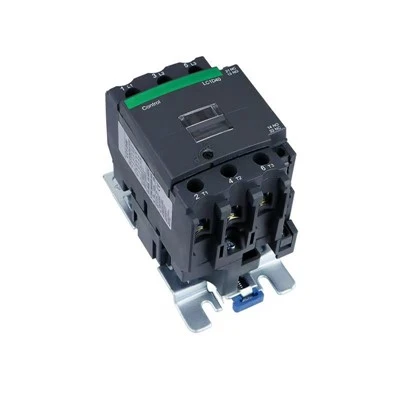
First off, let’s get on the same page: a contactor’s job is to flip big electrical circuits on and off, right? Think of it like a super sturdy light switch for motors, HVAC units, or whatever heavy-duty gear doesn’t trust a regular switch. If that switch gets too hot, it’s not just a hassle—you’re looking at fried coils, melted contacts, and a whole lot of downtime that no one wants. Let’s start with the number one culprit I see day in and day out: loose connections. Sound boring? Trust me, it’s the silent killer. I can’t tell you how many times I’ve pulled a contactor off a broken HVAC unit and noticed the line and load terminals are screwed on with the tightness of a loonie in a couch cushion. When electricity has to jump a gap between a loose wire and a terminal, that’s resistance—and resistance equals heat. It’s basic physics, not rocket science. What’s wild is this isn’t always installer mess, either. Sometimes wires expand and contract as they heat up and cool down over months, especially in outdoor units that deal with freezing winters and blistering summers. That tiny shift in the wire position over time? Next thing you know, you’ve got a hot spot that turns a contactor into a space heater. I once had a client who thought their contactor was defective because it overheated every summer—turned out the electrician who wired it had only tightened the terminals once, and the wire had loosened a full turn in a year. We re-torqued it to spec, and they haven’t had an issue since. Moral of that story: torque wrenches aren’t just fancy tools for mechanics. Use ’em.
Next up: the contacts themselves. That’s the part of the contactor that actually touches to close the circuit, right? Over time, those contacts can get worn down, dirty, or even pitted from arcing. What’s arcing? It’s that tiny spark you see when a light switch flips on super fast, but multiplied a million times over for heavy-duty contactors. Arcing happens when the contacts are separating or closing, and if it’s frequent or under heavy load, it eats away at the metal. If the contacts get too worn, they don’t make a full, tight connection anymore—again, more resistance, more heat. Another issue here is contact corrosion. If your contactor is in a damp or dusty environment (like a basement with a leaky sump pump or a warehouse that deals with metal shavings), moisture and gunk can build up on the contacts. That gunk is an insulator, so electricity can’t flow smoothly, and boom—heat. I had a manufacturing client last year whose contactors kept overheating on their stamping press, which kicks up so much metal dust it’s like a sandblaster in there. Turns out the contacts had a thin layer of iron dust that acted like a barrier. We swapped them for contactors with sealed contact chambers, and problem solved. Worth mentioning here: don’t just ignore worn contacts. A lot of people try to file them down to fix pitting, but if they’re too far gone, replacing the contactor is way cheaper than dealing with a fire or a total system failure.
Wait, let’s talk about the load side—too much current. Contactor sizing is a big one, and I see so many people skip this step to save a quick buck. Let’s say you’ve got a 20-horsepower motor that needs a contactor rated for at least that horsepower. If you slap a 10-horse contactor on there? It’s gonna be working way harder than it’s built for, carrying more current than it’s designed to handle. That extra current generates more heat, plain and simple. It’s like trying to carry a 50-pound backpack when you’re only built for 20—you’re gonna get tired, and in this case, “tired” means overheating. Another load-related issue: frequent cycling. If your contactor is turning on and off every few minutes (like for a conveyor belt that starts and stops all day long), it’s doing more cycles than a contactor built for occasional use. Each cycle creates a little arc, and all that extra arcing adds up to more heat over time. I had a logistics client whose conveyor system had contactors cycling 20 times an hour, way more than the 8 times per hour their contactors were rated for. We swapped them for heavy-duty duty-cycle contactors, and their overheating issues vanished. Easy fix, no headaches.
Now, let’s get into the coil side of things—yeah, the part that makes the contactor actually flip. The coil is the electro-magnet that pulls the contacts closed, right? If the coil’s voltage is off, that’s a huge problem. Too little voltage, and the magnet doesn’t pull the contacts all the way closed. So you’ve got those contacts not fully touching, resistance, heat. Too much voltage? The coil overworks, gets too hot, and can burn out entirely. I once had a client who swapped a 120V contactor coil for a 240V one by mistake, and the coil started smoking within five minutes. Oops. Coil voltage fluctuations aren’t always user error, either—sometimes the building’s power grid is wacky, especially in older buildings or areas with lots of other heavy machinery drawing power. We recommend adding a line reactor or a voltage stabilizer if you notice consistent coil voltage drift, which helps the contactor run at its optimal level. Also, if the coil itself is dirty or has loose wiring, that can add to the heat too—make sure the coil area is well-ventilated, not caked in dust or blocked by nearby parts.
Wait, I can’t forget environmental factors, because this stuff matters way more than most people think. If your contactor is crammed into a tiny, unventilated panel, it has nowhere to dump the heat it generates. It’s like standing in a closet with a space heater—you’re gonna get hot. Even if the contactor is rated for a certain temperature, if the surrounding panel is 10 degrees hotter than it should be, that pushes the contactor over the edge. Outdoor contactors are extra prone here—if they’re in direct sunlight all day with no shade, the ambient temperature spikes, and the contactor can’t handle it. I always tell clients to leave at least 20% of panel space around contactors for airflow, and if it’s an outdoor unit, get a weatherproof enclosure with vents, not just a plain box that traps heat. Another environmental thing: altitude. If you’re at a high altitude (like above 3,300 feet), the air is thinner, so it can carry less heat. Most standard contactors are rated for low altitude, so at higher elevations, they can run hotter than intended. That’s a thing no one tells you, but it’s super common for clients in mountain towns or high-altitude industrial sites.
Let me wrap this up with a quick story that ties all this together. A few months back, a small manufacturing shop hit me up panicking because three of their contactors had overheated and melted, taking their packaging line down for 12 hours. We went out to check, and turns out it was a perfect storm: their electrician had undersized the contactors for their new larger packaging motor, the terminals were only hand-tightened (no torque wrench, duh), and the panel was crammed full so there was barely any airflow. We sized new contactors correctly, torqued all terminals to spec, rearranged the panel to add airflow, and added a voltage stabilizer to fix their wacky power grid. Total fix that cost way less than losing a day of production. That’s the thing with overheating contactors—rarely is it just one single thing. It’s usually a combo of small issues that add up until something breaks.
If you’re dealing with overheating contactors, don’t wait for a full breakdown to fix it—reach out, we can help you figure out exactly what’s going on, whether it’s sizing, torque, environmental setup, or something else entirely. We work with all kinds of operations, from small shops to big industrial plants, so we’ve seen it all. Drop us a line to chat through your contactor issues, no obligation, just real advice from people who work with this stuff every single day.
Air Circuit Breakers References
- "Contactor Application Guide", National Electrical Manufacturers Association (NEMA), 2022.
- "Electrical Contact Overheating: Causes and Mitigation", IEEE Transactions on Components, Packaging, and Manufacturing Technology, Vol. 11, No. 9, 2021.
- "Industrial Control Devices Handbook", Schneider Electric, 2023.
- "Torque Requirements for Low-Voltage Terminal Connections", Occupational Safety and Health Administration (OSHA), 2020.
Wenzhou Lanen Electrical Co., Ltd.
Wenzhou Lanen Electrical Co., Ltd. is one of the most professional contactor manufacturers and suppliers in China, also supports customized service with low price. Please feel free to buy CE approved contactor made in China here from our factory. Contact us for more discount information.
Address: Zhiguang Liushi Town Yueqing City Wenzhou City Zhejiang Province
E-mail: lanen@luyele.cn
WebSite: https://www.lanenelectrical.com/
