If you’ve ever stood beside a working marine generator set on a ship—whether on a container freighter crossing the Pacific, a fishing trawler bobbing in the North Sea, or a luxury yacht cruising the Mediterranean—you might have noticed a quiet, steady hum, nothing like the loud, rattling generators you’d find in a land-based construction site or a backup power unit for a warehouse. That calm efficiency isn’t an accident. It’s the cooling system doing its job, a often-overlooked part of the marine genset that keeps the whole operation from overheating, breaking down mid-voyage, or worse. Marine Generator Set
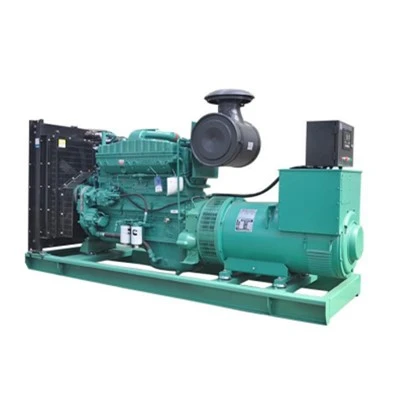
I’ve been selling and servicing marine generator sets for 12 years now, and I can’t tell you how many times a captain or chief engineer has called me in a panic because their cooling system failed mid-crossing. I’ve seen gensets seize up so badly the crankshaft snapped; I’ve had a skipper towed into port with half his refrigerated cargo spoiled because the generator overheated and shut down. Most of the time, it’s not a bad part, it’s someone not understanding how marine cooling works differently from cooling a land-based generator. On land, you’ve got plenty of fresh air, steady temperatures, no salt spray or constant tilt. On a ship, the rules change entirely, and the cooling system is the backbone of reliable power at sea.
Let’s break this down simply, because I don’t believe in overcomplicating things for the people who actually work on these machines. A marine generator set isn’t a magic box that turns diesel or natural gas into electricity. It’s an engine, same as your car’s, just bigger, more powerful, and built to run 24/7 for weeks or months at a time. When that engine runs, parts like pistons, cylinders, and valves get hot—way hotter than they can handle. Left unmanaged, those parts would expand, warp, rub together, and lock up. The cooling system’s whole job is to pull that excess heat away before it causes damage, and keep the engine running at its ideal temperature, 90 to 105 degrees Celsius, for most diesel gensets.
The most common cooling setup for modern marine gensets is a closed-loop, two-part system, and that’s where a lot of new engineers get confused. First, there’s the freshwater (sometimes called “clean water”) circuit. This is the part that touches the engine’s hot parts—the cylinder block, the cylinder head, the turbocharger, even the exhaust manifold. It’s just regular filtered water, sometimes with a corrosion inhibitor and anti-freeze for cold climates, sealed up tight so nothing contaminates it. Inside the engine’s water jackets, a water pump pushes this freshwater through all the hot areas, absorbing heat like a sponge. It travels to a heat exchanger, and that’s where the second part of the system kicks in: the saltwater, or “seawater,” circuit.
Seawater is pumped in from the ocean, straining it first through a filter to keep out seaweed, barnacle fragments, and tiny debris that would clog pipes. That cold seawater flows through the other side of the heat exchanger, never touching the engine’s parts directly. It pulls the heat out of the freshwater, then gets pumped back overboard. That closed freshwater loop is critical. If the engine used seawater directly to cool its internals, the salt would build up as scale, corrode metal parts, and eventually seize the engine within months. I’ve seen gensets where someone bypassed the heat exchanger to save a few bucks on repairs, and they were out of commission by the next port call.
Wait, I should mention another type of cooling too—air cooling. You’ll see that on smaller gensets, like the portable backup units on fishing dinghies or small workboats that never go far from shore. These have fins on the outside of the engine, and a fan blows air over them to carry heat away. But air cooling is only for small, low-power gensets, less than 50 kW. For anything bigger, for the gensets that power a 10,000 TEU container ship or a offshore support vessel, air cooling just doesn’t move enough heat fast enough. That’s when you need seawater and a heat exchanger.
There’s more to the system than just two circuits, though. Let’s talk about the parts that keep it all running, because even a tiny part failure can sink the whole works. First, the pumps. The freshwater pump is usually driven by the engine itself, so it runs every time the genset is on. The seawater pump—some gensets have two: a main pump and a backup, in case one fails—is often driven electrically, especially on newer models, so it can keep running even if the engine is idling low. If the seawater pump stops, the heat exchanger can’t pull heat out, and the freshwater temperature spikes in 10 minutes flat. I’ve had a customer in Florida call at 2 a.m. once because his seawater pump’s impeller gave out, and by the time we got a replacement shipped, his genset was overheated so bad he had to replace the cylinder head.
Then there’s the thermostat, that little valve that’s like the engine’s temperature control knob. It keeps the freshwater at that ideal range. When the engine is cold, like when you first start it up in the morning on a winter voyage, the thermostat stays closed, so the freshwater doesn’t flow to the heat exchanger. That lets the engine warm up faster, which reduces wear and tear and helps it run efficiently. Once it hits the right temperature, the thermostat opens, and the cooling process kicks into full gear. If the thermostat sticks closed, the engine overheats; if it sticks open, it runs too cold, burns more fuel, and causes corrosion. I replace at least a dozen thermostats a month on marine gensets—they’re small, easy to check, and such a common fix for overheating issues.
The heat exchanger itself is another big one. These aren’t like the radiators in your car, which use air to cool the coolant. Marine heat exchangers are shell-and-tube or plate-type. Shell-and-tube is the old standard: freshwater flows through the tubes, seawater flows around them, and heat transfers through the tube walls. Plate-type is more modern, smaller, more efficient, and easier to clean, which is why most new gensets use them. But they’re also more prone to clogging if the seawater filter isn’t changed. Every time a vessel goes into port, the chief engineer should check that filter—even a tiny piece of seaweed can block enough tubes to make the heat exchanger work 50% less well.
And let’s not forget about the safety features, because at sea, you can’t wait around for the engine to blow. Most modern marine cooling systems have alarms that trigger if something goes wrong. If the freshwater temperature gets too high, a warning light flashes in the control room, and if it keeps rising, the genset will automatically shut down to prevent damage. Some systems even have a backup seawater pump that kicks in if the main one fails, and a backup water pump for the freshwater loop, just in case. I always recommend to my customers that they upgrade to the full safety package, even if it costs a little more upfront. I’ve seen a vessel lose a $200,000 genset because they skipped the alarms and didn’t notice the cooling system was failing until it was too late.
Now, here’s what really matters about marine cooling systems, and what most suppliers won’t tell you: they’re not one-size-fits-all. A genset for a cargo ship that runs nonstop in tropical waters needs a different cooling system than a genset for a fishing trawler that runs in icy North Atlantic waters. In cold climates, the freshwater has to have anti-freeze mixed in to keep it from freezing, which would crack the engine’s water jackets and the heat exchanger. In warm, salty waters, the materials matter—you need heat exchangers made of titanium or cupronickel, not regular steel, to resist corrosion. I’ve had customers come to me with cheap gensets from overseas that used plain brass heat exchangers, and within a year, they were corroding through from seawater. I always build the cooling system to match the operating environment, not just throw a standard unit at them.
Maintenance is half the battle, too. A good cooling system doesn’t fail out of the blue—it fails because it wasn’t checked regularly. The biggest mistake I see is owners skipping flushing the freshwater circuit and the heat exchanger. Over time, scale builds up from the coolant, and corrosion deposits form, which act like an insulator, so the heat can’t transfer from the freshwater to the seawater. A flush every 1,000 operating hours, or every six months, keeps that system working like new. We also recommend testing the coolant every six months to make sure the corrosion inhibitors are still working—salt and heat break those down over time, and if they’re gone, the engine will corrode from the inside out.
A lot of people ask me, why is this more important for marine gensets than for ship’s main engines? The main engine is big, and it’s designed to move the whole ship, with plenty of cooling. The genset is smaller, running at a steady load, but it has to power every single thing on board: the lights, the refrigeration, the navigation equipment, the hotel systems for the crew. If the genset overheats, not only do you lose power—you lose the ability to keep cargo cool, the ability to navigate in bad weather, the ability to keep the crew comfortable. That’s why I tell every customer: the cooling system is not an afterthought. It’s the most critical part of the genset, after the engine itself.
I’ve spent years refining how we build and service these systems, because I’ve seen what happens when they go wrong. Last year, I worked with a small fishing company that had a genset overheat on their way back to Newfoundland. They were 30 miles from port, their cooling system had a clogged filter, and by the time we troubleshooted over the phone, their genset had shut down. They had to run on their backup generator, which was only half the power they needed, and they lost half their catch because their refrigeration couldn’t keep up. That could have been avoided with a simple filter check every week, which would have cost them $20.

For me, this isn’t just selling a generator. It’s making sure a captain can get their cargo to market, a crew can stay safe, and a vessel doesn’t have to sit in dry dock for months. The cooling system is the quiet workhorse that makes all of that possible. If you’re outfitting a new vessel, replacing an old genset, or having trouble with your current marine generator set’s cooling system, don’t guess at it. Work with someone who knows the sea, not just the factory specs. We build custom cooling systems for every type of marine genset, from small workboats to large commercial vessels, and we’re here to help you keep your power running smooth, no matter where the water takes you. If you want to talk through your needs, we’re ready to chat.
Silent Generator Set References
Marine Diesel Engines and Generator Sets: Operation, Maintenance, and Troubleshooting. 2nd Edition, Marine Technology Publishers, 2021.
Guidelines for Marine Generator Set Cooling Systems, International Maritime Organization (IMO) Marine Equipment Guidelines, 2019.
Heat Exchanger Selection and Maintenance for Marine Applications, American Bureau of Shipping (ABS) Technical Bulletin, 2020.
China Modo Investment Co., Ltd.
As one of the most professional marine generator set manufacturers and suppliers in China, our products have good reputation in the market. We warmly welcome you to wholesale advanced marine generator set in stock here from our factory. If you have any enquiry about cooperation, please feel free to email us.
Address: Boye Industrial Park,Baoding city,Hebei Province,China.
E-mail: sales@mstengine.com
WebSite: https://www.mst-engine.com/
