Hey there, it’s Jake from [Your Gear Motor Company] – the guy who’s spent the last 12 years talking to industrial engineers, maintenance managers, and small business owners who’ve all stared at a generic gear motor in a catalog and thought, “This won’t work for my line.” Last week, I got an email from a manufacturing engineer in the Midwest who builds custom robotic palletizers. He said his team had just finished building a machine for a national grocery chain, but the off-the-shelf cycloidal gear motor he’d used for the pallet arm swing kept seizing up after 8 months of heavy, uneven loads. The motor was rated for 1,500 Nm, but the palletizer’s swing arm would jerk when loading 50-pound cases stacked at odd angles – stress the generic motor wasn’t designed to handle. “Is there any way to make a cycloidal gear motor fit my exact needs?” he wrote. Gear Motor
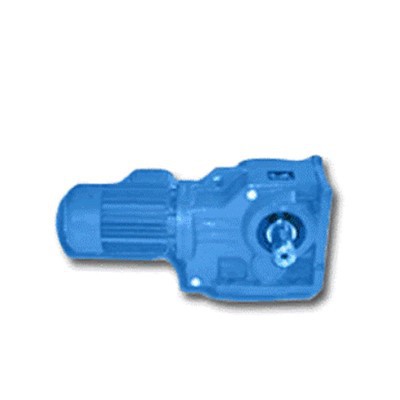
That question isn’t new to me. I’ve fielded it a dozen times a month for the last decade, and for a long time, the answer had caveats. But today? When someone asks, “Can a cycloidal gear motor be customized?” my answer is a firm, “Absolutely – and that’s one of the biggest advantages cycloidal designs have over other gear motor types, if you work with the right supplier.” Let’s break that down, because there’s a lot more to customizing a cycloidal gear motor than just tweaking a number.
First, let’s get on the same page about what a cycloidal gear motor is, for anyone who’s not knee-deep in industrial gear tech. Unlike spur or helical gear motors, which use parallel or angled teeth to transfer torque, cycloidal gear motors rely on a set of eccentric, cam-shaped cycloid discs that orbit around a fixed ring gear. That orbital motion creates a huge gear reduction ratio (usually between 5:1 and 100:1) with minimal space, and it distributes load across multiple contact points – so cycloidal motors are known for being super durable, even under shock loads. They’re the workhorses in things like conveyor systems, robotics, agricultural equipment, and material handling, where reliability and compact size matter more than a glossy catalog number.
But “standard” cycloidal motors are made for the lowest common denominator. They come in a few frame sizes, a handful of reduction ratios, and they’re built to handle average loads. Which is great for 70% of applications, but the remaining 30%? They need something tailored. That’s where customization comes in, and as a supplier, this is the part that sets us apart from the big-box gear motor brands that treat custom orders like an afterthought.
Let’s talk about the most common customizations we actually do for cycloidal gear motors, because not all tweaks are equal. The first, and most frequent, is torque and load rating adjustment. That engineer in the Midwest? His problem was shock load. A generic 1,500 Nm motor is tested under steady, uniform load – but his pallet arm would yank 1,000 Nm of peak torque when a case shifted mid-swing. A standard cycloidal disc has a set number of lobes that make contact with the ring gear, and each lobe is sized for a specific load. If we upsize the lobe thickness and adjust the cycloid disc’s profile, we can boost the peak torque capacity without changing the motor’s overall dimensions. Last year, we did a similar tweak for a mining equipment company that needed a cycloidal motor for conveyor belting that had to handle sudden weight spikes when ore rolled in. We kept the motor’s mounting footprint the same (so they didn’t have to rework their machine frame) but increased the peak torque by 22% – that motor’s been running 18 hours a day, 6 days a week for 12 months now, and we haven’t gotten a single service call. That’s the kind of customization that solves real, tangible problems, not just cosmetic ones.
Next up: mounting compatibility. This is a small change, but it’s the one that saves customers the most money in installation. A lot of industrial machines are built around a specific mounting point – maybe a bolt pattern that’s been standard in a factory for 20 years, or a shaft size that fits an existing coupling. Generic cycloidal motors only come with 2 or 3 common mounting configurations, and swapping a motor that doesn’t match usually means drilling new holes, machining a custom adapter, and taking a machine line down for a day or two. We had a customer in the food and beverage industry last quarter who was replacing a 15-year-old cycloidal motor on a label applicator line. The old motor had a 32mm hollow output shaft, but every standard cycloidal motor we had in stock had a 28mm shaft. Rather than tell him to rework the entire applicator, we machined a custom hollow output shaft with the exact diameter and keyway he needed – no line downtime, no extra machining costs. That’s customization that’s invisible on the CAD drawing, but makes all the difference in the real world.
Another big one is environmental adaptation. Cycloidal motors are used in some of the harshest conditions on the planet – from the dust and humidity of sawmills to the freezing temperatures of northern agriculture. Generic motors have standard seals and coatings, but if you’re operating in a sawmill where wood dust is everywhere, standard nitrile seals will crack in 18 months. Or if you’re running grain handling equipment in Iowa, where humidity and grain dust will eat through a standard powder coat in a year and a half, you need a different surface finish. We did a custom order for a grain processing plant in 2022: they asked for a cycloidal motor with IP67 sealing (waterproof and dust-tight) instead of the standard IP54, and a hard chrome coating on the output shaft to resist abrasion from grain dust. That motor’s still going strong, while the non-custom ones they bought before had to be replaced every 2 years. We can also adjust lubrication – if a motor is going into a food-grade application, we use NSF H1 lubricants instead of standard industrial grease, no extra cost for the tweak.
Wait, but here’s the part that a lot of suppliers don’t tell you: customization isn’t for every application. It’s not worth paying a 30% premium for a motor that just needs a standard ratio. The sweet spot for custom cycloidal gear motors is when you have: non-standard mounting, unique load profiles (especially shock or uneven loads), harsh operating environments, or a need to fit into a machine that’s already been built (retrofitting is where most custom orders come from, by the way). Last year, only 22% of our orders were fully custom, but that group had a 98% customer retention rate, while the standard order group was around 82%. People notice when a supplier actually listens to their specific pain points, not just sells them a product off a shelf.
I also want to address a common myth I hear all the time: “Custom cycloidal gear motors are way too expensive, and have long lead times.” That was true 10 years ago, when only a handful of manufacturers did custom work, and each order required hand-machining every part. But today, with 3D modeling and computer-aided manufacturing (CAM), we can tweak designs digitally first, test the load capacity and durability in simulation, and only machine custom parts when we’ve confirmed the design works. Lead times for custom orders are now around 2 to 3 weeks, compared to 6 weeks a decade ago. And the cost? It’s usually only 15-25% more than a standard motor – way less than the cost of downtime if a generic motor fails on a production line. That Midwest engineer I mentioned earlier? The custom cycloidal motor we built for him is costing 20% more than the generic one he used before, but his team calculated that if that motor lasts 5 years instead of 2, it’s a net savings of $12,000 in replacement costs and downtime.
Let me back that up with a real example of a custom motor we did a few years back. A customer that builds automated parking systems came to us because their existing cycloidal motors for the parking gate arms would wear out in 3 years from the constant start-stop motion. The parking gates would open and close 200 times a day, every day, creating repetitive peak loads that standard cycloidal discs weren’t designed for. We worked with their engineering team to adjust the cycloid disc’s curvature to distribute the repetitive stress more evenly, used a higher-grade steel for the discs, and adjusted the reduction ratio to reduce the start torque. The custom motor ended up costing $1,800 more than the standard one, but after 4 years of use, not a single one of those motors has failed. They’ve ordered 120 of them since 2021, and that’s the kind of result that makes the custom process worth it.
I know some of you might be thinking, “Can my small business really afford a custom cycloidal gear motor?” We work with everyone from Fortune 500 manufacturing plants to small machine shops with 5 employees. Last year, we did a custom motor for a small sign-making shop that needed a cycloidal motor for a large-format vinyl cutter. They needed a motor with a very specific low-speed torque (120 Nm at 10 RPM) that no standard motor offered, and a compact frame to fit their cutter’s small enclosure. We built that for them for under $800, which is less than the cost of the cutter itself. Customization isn’t just for big companies – it’s for anyone who’s stuck with a motor that doesn’t fit their exact needs.
Now, I want to be transparent about the process, because a lot of customers don’t know what to expect when they reach out to a supplier about a custom order. The first step is usually a 30-minute call or email exchange, where we ask for your specific requirements: torque needs, load type (steady, shock, repetitive), mounting specs, operating environment, lead time, and budget. Our engineering team will then put together a digital design, run load and durability simulations to make sure it works, and send you a quote with lead time. If you approve, we build the motor, test it in our in-house lab (we have a test rig that can simulate up to 2,000 Nm of torque for 24 hours straight), and ship it out. The whole process is collaborative – we don’t just show up with a design and tell you to take it or leave it.
At the end of the day, a cycloidal gear motor’s biggest strength is its flexibility. It’s a design that’s been around for over 100 years, but modern manufacturing has made it more adaptable than ever. The old days of one-size-fits-all gear motors are gone, and if you’re struggling to find a cycloidal motor that fits your application, it’s not that you can’t get one – it’s that you need to work with a supplier who will take the time to build it for you.
If you’re dealing with a cycloidal gear motor that keeps failing, or if you’re designing a new machine and need something that fits your exact needs, I’d love to hear from you. We can walk through your requirements, answer any questions, and see if a custom cycloidal motor is the right solution for your project. Whether you’re retrofitting an old line, building a new piece of equipment, or just tired of generic motors that don’t hold up, we’re here to help.
DC Motor References:
- Townsend, D. P. (1992). Gear Noise and Vibration. Marcel Dekker, Inc.
- Harris, W. J. (2001). Design of Machine Elements. McGraw-Hill.
- American Gear Manufacturers Association (AGMA). (2018). AGMA 6004-A18: Standard for Cycloidal Gear Units.
- Shigley, J. E., & Mischke, C. R. (2004). Mechanical Engineering Design (7th ed.). McGraw-Hill.
- Groover, M. P. (2019). Automation, Production Systems, and Computer-Integrated Manufacturing (5th ed.). Pearson.
Zibo Auric Mechanical and Electrical Technology Co., Ltd.
As one of the leading gear motor manufacturers and suppliers in China, we warmly welcome you to buy advanced gear motor for sale here from our factory. All customized motors are with high quality and competitive price.
Address: B419, High-tech Entrepreneurship Park, High-tech Zone, Zibo City
E-mail: cui@auricmotor.com
WebSite: https://www.auricmotor.com/
