If you’re in the market for custom machined parts, chances are you’ve heard of CNC turning services—but you might not realize just how many industries rely on this workhorse process. I’ve been running a small CNC turning shop for the past 8 years, and let me tell you: we don’t just make random metal or plastic bits for one niche. Day in and day out, we crank out parts for everything from your grandma’s pacemaker to the drone someone’s testing for a new farming startup. Let’s break down the industries that actually use our services, why they can’t live without CNC turning, and what makes this process so versatile. CNC Turning Services
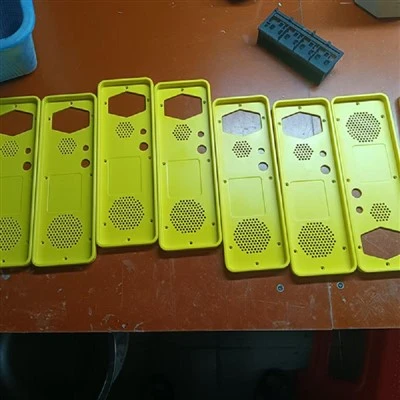
First off, let’s keep it simple: what even is CNC turning, for anyone who’s new? No need for jargon—basically, it’s a machining process where a material (metal, plastic, wood, even some ceramics) spins on a spindle at super high speeds, and a cutting tool moves along its surface to carve out the exact shape you need. Unlike manual turning, it’s computer-controlled, so it’s consistent even for hundreds or thousands of parts. That consistency is why industries won’t touch anything else for certain components.
Let’s start with aerospace. This is one of our biggest clients, and for good reason. Aircraft parts can’t be “close enough”—a tiny misalignment in a fuel line fitting or a landing gear pin can lead to massive safety issues, and aerospace companies need parts that hold up to extreme temperatures, pressure, and vibration. We work with titanium, aluminum, and Inconel here—materials that are tough to machine but perfect for planes and rockets. Last year, we made custom valve bodies for a regional jet’s hydraulic system, and the client came back because every part was within 0.001 inches of their specs. That’s the kind of precision aerospace can’t skip. Even satellite components use CNC turning; small, lightweight housings for sensors need to be seamless, so turning lets us machine those from a solid block instead of assembling multiple pieces, which cuts down on weight and failure points.
Next up: medical devices. This one hits close to home because my aunt is a nurse, so I know how critical these parts are. Think about pacemaker leads, orthopedic bone screws, surgical instrument handles, even the small gears in insulin pumps. Medical parts can’t have any rough edges, right? They go inside or on patients’ bodies, so surface finish is non-negotiable. CNC turning lets us polish parts to a smooth finish without leaving tool marks that could irritate tissue. We also use medical-grade materials here—stainless steel, titanium, PEEK plastic—because they’re biocompatible. A few months back, we made small titanium pins for knee replacements; those pins have to fit perfectly into the bone, so we had to dial in the spindle speed just right to avoid warping the material. The client told us those pins are used in over 2,000 surgeries a year now. That’s the kind of impact you don’t get with every industry.
Then there’s automotive. Even with all the talk about EVs, internal combustion engines are still around, and EVs have their own set of parts that need turning. Let’s break it down: traditional cars need camshafts, crankshaft pins, brake caliper pistons, and fuel injectors. EVs? They use electric motor shafts, battery cooling system fittings, and even small sensor housings for self-driving tech. The cool thing about automotive is that they need both low-volume custom parts (like for a classic car restoration) and high-volume runs (like 100,000 motor shafts a month). CNC turning can handle both—we can adjust the program for a custom part in an hour, or run a mass production line overnight. I once worked with a guy restoring a 1967 Camaro who needed a custom steering column bushing; he couldn’t find it anywhere else, so we turned it from a solid block of brass. That’s the kind of small, specialized part CNC turning saves here.
Consumer electronics is another huge one, and it’s not just the obvious stuff. Everyone uses smartphones, laptops, and wireless earbuds—those have tiny, precision parts made with CNC turning. Take the aluminum frames of most phones: the small antenna mounts, button pins, and internal brackets are all turned parts. Even the USB-C connectors on your laptop have small metal pins that are machined to fit exactly. What I like about consumer electronics is that it moves fast—designs change every year, and clients need parts quick. Our CNC machines can switch to a new part design in minutes, which is way faster than manual machining. We also work with plastics here, like polycarbonate housings for portable chargers. Those housings need to be durable but light, so turning lets us carve out the exact shape without extra material.
Oil and gas might not be the first industry you think of, but they rely on CNC turning too. Their parts have to handle extreme conditions—deep underground, high pressure, corrosive fluids. Think about pipe fittings, valve stems, and sensor housings that go on drilling equipment. These parts can’t fail mid-drill, so they need to be strong and precise. We work with stainless steel and alloy steels here, and we have to make sure every thread and seal is perfect. Last year, we made custom valve stems for a drilling rig in the Gulf of Mexico; the client said they’ve been working without issues for 18 months, which is way longer than their old parts. That’s the reliability CNC turning brings here.
Wait, let’s not forget firearms. Yeah, I know that’s a sensitive topic, but it’s a real industry that uses CNC turning services a lot. Gun parts like barrels, trigger pins, bolt carriers, and magazine followers are all turned. The precision here is next level—even a 0.001 inch difference in a barrel can throw accuracy off by inches over a long distance. We use steel and stainless steel here, and we follow all safety regulations to make sure parts are machined correctly. I’ll be honest, this is a smaller part of our business, but it’s a good example of how CNC turning works for industries that need extreme precision.
Now, why does CNC turning beat other processes for these industries? Let’s be real—there are other machining methods, like milling, but turning is better for cylindrical parts. If you need a round shape, a pin, a shaft, a fitting—turning is faster, more precise, and less wasteful. You can machine complex features in one setup, so you don’t have to move the part around, which reduces errors. Also, for low volumes, it’s super flexible—if a client needs a prototype part, we can have it ready in a day or two. For high volumes, it’s consistent, so every part is the same, no matter how many you make.
I’ve learned over the years that the best clients are the ones who understand how CNC turning works, but even if you’re not a machining expert, you just need someone who can listen to what you need. A lot of our clients come to us with a sketch or a sample part that’s worn out, and we can replicate it or improve it. For example, a farm equipment manufacturer once came to us with a worn pivot pin for a tractor’s plow; they had a broken sample, and we turned a new one from a stronger steel that lasted twice as long. That’s the kind of service we’re all about.
If you’re working in any of these industries, or even another one where you need custom cylindrical parts, don’t hesitate to reach out. We’ve got the machines, the experience, and the materials to get your parts right the first time. No hidden fees, no runaround—just honest work and precision parts that hold up.
Vacuum Casting Services References:
- Manufacturing Engineering and Technology, Kalpakjian, S., Schmid, S.R.
- Aerospace Machining: Precision Manufacturing for Aircraft and Spacecraft, Society of Manufacturing Engineers
- Medical Device Design and Manufacturing, FDA Center for Devices and Radiological Health
- Automotive Machining Handbook, Automotive Industry Action Group
- CNC Turning Basics: A Guide for Small Businesses, National Tooling and Machining Association
Shenzhen Multi-Wins Precision Technology Co., Ltd.
As one of the most professional CNC turning manufacturers and suppliers in China, we have world-leading production equipment and strong manufacturing capabilities. Please feel free to buy customized CNC turning made in China here from our factory. Also, quotation is available.
Address: 1 Phase, Yi’an City Central Garden, Longfei Avenue, Longgang District, Shenzhen, GD, China. 518100
E-mail: info@multi-wins.com
WebSite: https://www.multi-wins.com/
